Australian Amano Shrimp
$3.09 USD


- Fully quarantined fish
- Professionally packed
- Live arrival guarantee
Regular price
$3.09 USD
Sale price
$3.09 USD
Regular price
Unit price
per
Shipping starts at $22.99 depending on your location
Couldn't load pickup availability
Sold out
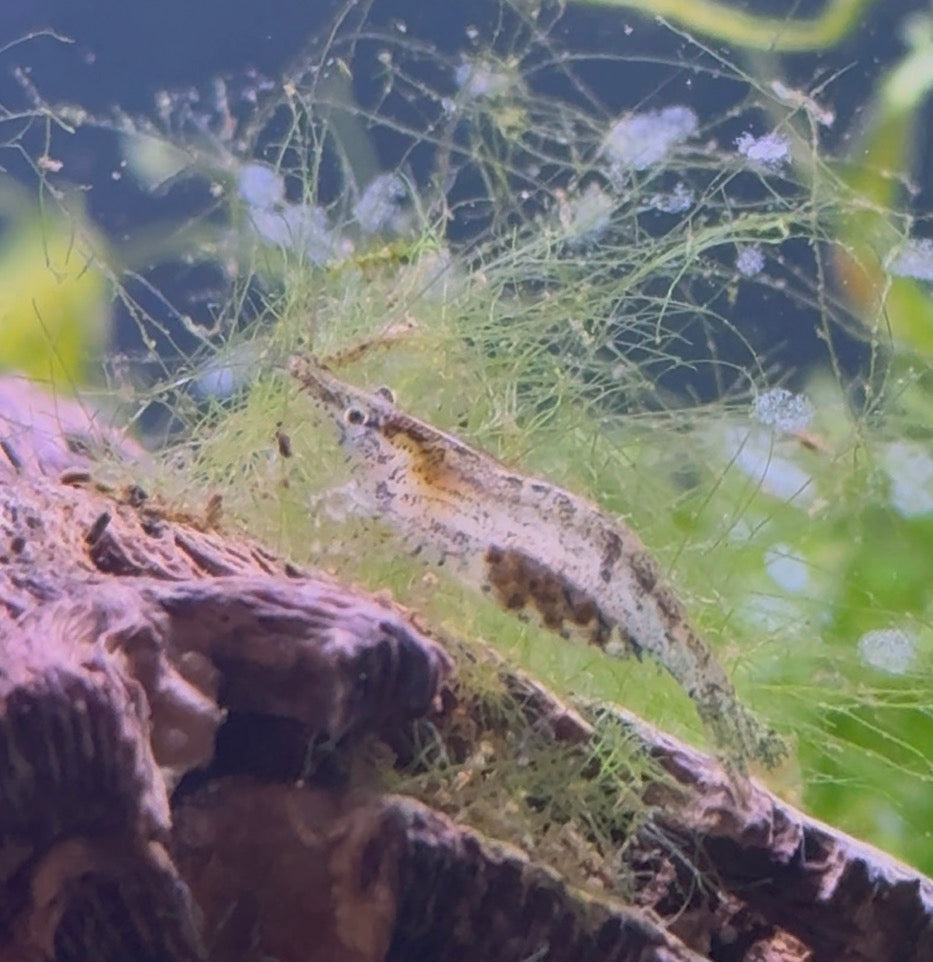
Australian Amano Shrimp, Caridina typus, is a freshwater dwarf shrimp native to northern Australia, New Guinea, Indonesia, the Philippines, and numerous islands throughout the Indo-Pacific region. In Australia, it is commonly found in clear coastal streams, rainforest creeks, and small rivers where it inhabits rocky substrates, submerged wood, leaf litter, and dense aquatic vegetation. These habitats are typically clean, well oxygenated, and characterized by moderate water movement that supports abundant algae and biofilm growth. Although commonly referred to as the Australian Amano Shrimp due to its similar appearance and behavior, Caridina typus is a distinct species from the well-known Japanese Amano Shrimp (Caridina multidentata).
Adult Australian Amano Shrimp typically reach about 1.5 to 2 inches in length, making them somewhat smaller and more slender than the Japanese Amano Shrimp, which commonly reaches 2 to 2.5 inches. Their body is largely translucent with subtle tan, olive, or smoky coloration that varies depending on diet and surroundings. Fine rows of dark brown to reddish speckles and short dashes extend along the sides of the body, while the internal organs remain visible through the transparent exoskeleton. Compared to Caridina multidentata, Australian Amano Shrimp generally exhibit finer markings, a more delicate body shape, and a cleaner, more transparent appearance that many aquascapers find especially attractive. Females are larger and deeper-bodied than males and develop a broader abdomen for carrying eggs.
A mature aquarium of at least 15 gallons is recommended, although larger aquariums provide greater stability and more natural grazing opportunities. Australian Amano Shrimp thrive in planted aquariums with driftwood, rounded stones, mosses, leaf litter, and abundant biofilm. Moderate water movement and high dissolved oxygen levels closely resemble their natural habitat. Shrimp-safe filtration is essential, and plenty of hiding places should be provided, particularly during molting.
Water conditions should remain clean and stable. Temperatures between 70 and 80 degrees Fahrenheit are ideal, with a pH range of approximately 6.5 to 7.8 and soft to moderately hard water. Consistently low nitrate levels, regular water changes, and stable water chemistry are important for successful molts and long-term health. Like other dwarf shrimp, they are sensitive to copper-based medications and sudden changes in water parameters.
Australian Amano Shrimp are excellent scavengers and algae grazers. They spend nearly all of their time feeding on soft algae, biofilm, diatoms, decaying plant material, and microorganisms growing on hard surfaces. Like their Japanese relatives, they are highly effective at controlling soft algae and consuming leftover food, although their slightly smaller size means they are somewhat better suited to nano aquariums and more delicate aquascapes. They should also be offered quality shrimp foods, algae wafers, blanched vegetables, and occasional protein-rich foods in moderation, as no shrimp should be expected to survive on algae alone.
Temperament is exceptionally peaceful. Australian Amano Shrimp coexist well with other peaceful shrimp, snails, Corydoras, Otocinclus, small rainbowfish, rasboras, tetras, and other gentle community fish that are unlikely to view them as prey. Their constant activity and tireless grazing make them one of the most useful invertebrates for planted aquariums.
Breeding follows a life cycle similar to that of the Japanese Amano Shrimp. Females readily produce and carry large clutches of eggs in freshwater, but the newly hatched larvae require brackish to marine conditions to complete their development before returning to freshwater as juveniles. As a result, successful captive breeding is considerably more challenging than with freshwater-breeding dwarf shrimp such as Crystal Reds or Neocaridina varieties, and most specimens available in the aquarium trade remain wild collected.
Caridina typus combines the renowned algae-eating ability of the Japanese Amano Shrimp with a more refined appearance and a size better suited to smaller planted aquariums. Its peaceful temperament, nearly transparent beauty, and tireless grazing behavior make the Australian Amano Shrimp an exceptional choice for aquascapes, community aquariums, and anyone seeking an efficient yet elegant cleanup crew.